
Gumátor
What began as a shared spreadsheet evolved into one connected operations platform, bringing front-desk operations, workshop jobs, bookings, tyre storage and product ordering into the same flow.
- Challenge: Copies of the same XLS file moved between reception and the workshop, making it harder to maintain a reliable overview as the spreadsheet came to support more parts of the operation.
- Solution: A practical evolution from a database replacement for the familiar workflow to bookings, scheduling and, ultimately, one unified platform.
- Impact: Information is captured once and remains connected, while the platform can continue to evolve with the tyre service.
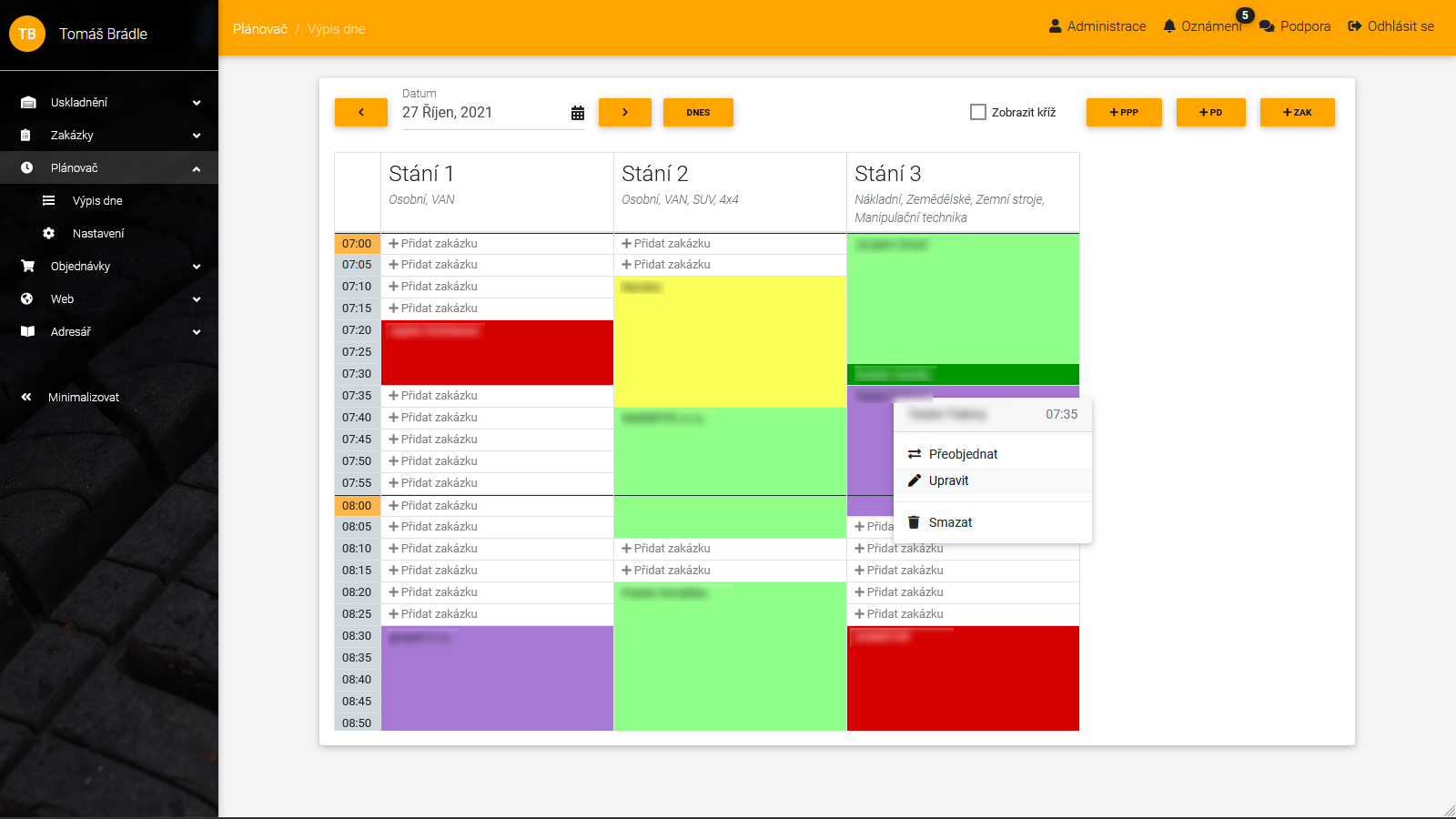
From a shared spreadsheet to the platform behind the entire operation
Gumátor was never a one-off build with a fixed finish line. It became a long-term product that evolved alongside the tyre service itself. Each stage addressed a real source of friction in day-to-day work while building naturally on the routines the reception and workshop teams already understood.
It started with an Excel template
Workshop jobs, tyre storage and air-conditioning services were recorded in an XLS template. A fresh copy was created for each case and shared between reception and the workshop. The routine was familiar and worked for a time, but as the operation grew, it became harder to identify the latest version, trace related information and maintain one reliable overview.
Change the tool, not the way people work
The first release did not try to redesign the business from a distance. It kept the familiar logic of the spreadsheet and moved it into a database-driven application with two natural working views: one for reception and one for the workshop. Both sides could finally work with the same up-to-date information without passing copied files back and forth.
Built in response to real use
As the new approach became part of everyday work, the system expanded to cover more job types and practical features suggested by the people using it. Development was not driven by a feature list written at the outset. It followed the real situations that could make the next day easier for reception and the workshop.
Online bookings opened the next chapter
A new website and a separate online booking system came next, together with the first calendar-based daily planner. Once retyping bookings into workshop jobs became an obvious source of unnecessary work, we added a full-day export from bookings and an import into SAM. This pragmatic bridge connected the customer's booking with the service workflow and removed a repetitive step.
Bringing every moving part together
The next generation united the separate tools in one platform. Workshop jobs, bookings, scheduling and tyre storage began sharing the same data and logic. The calendar gained a clearer visual structure and more precise time slots, storage became smarter, and a product ordering module was added with direct links to individual jobs.
A foundation that can keep evolving
Today, these areas no longer operate as isolated applications. Information entered at one point can continue wherever it is needed next. Reception and the workshop share the same context, bookings move into daily operations without needless re-entry, and product orders and tyre storage remain connected to the relevant job.
The real value is not the number of features. It is the ability to accommodate the next worthwhile change without forcing the business into the limits of a generic tool. What started as a shared Excel template has grown into a platform shaped around the way the tyre service actually works, with room to keep growing alongside it.